
How to Become a League of Legends Analyst?

Table of Contents
Some people seem to have a better grasp of how a LoL match plays out. They’re able to predict the flow of games, calculating cooldowns or tracking jungle paths to identify where matches are headed. These suggest having an aptitude for becoming a pro LoL analyst.
In LoL, analysts shape the drafting strategy for teams or spearhead patches at Riot Games. It’s a demanding job where you’ll be working with data and transforming that into something that others can understand and act on.
Learn more about the League of Legends analysts and see if you have what it takes.
Roles and Responsibilities of a LoL Analyst

As an analyst, there are two types of environments where you may find yourself working: the competitive esports scene or as part of a development team. Let’s break down the basics for each one.
On an Esports Team
You’ll work to provide various insights to the coach through conducting VOD reviews, scrim data, and opponent scouting. You identify key strengths that contribute to success, or identify crippling weaknesses for both your and the opposing team.
At a company such as Riot Games
Here you’ll be using your analytical skills for something a bit different and perhaps larger in scope. You’ll gather and analyze data for millions of players, identifying key points that make the game fun and fair, and helping to keep it that way. You’ll contribute to new game modes and help balance champions for key game updates.
Skills and Tools of a LoL Analyst
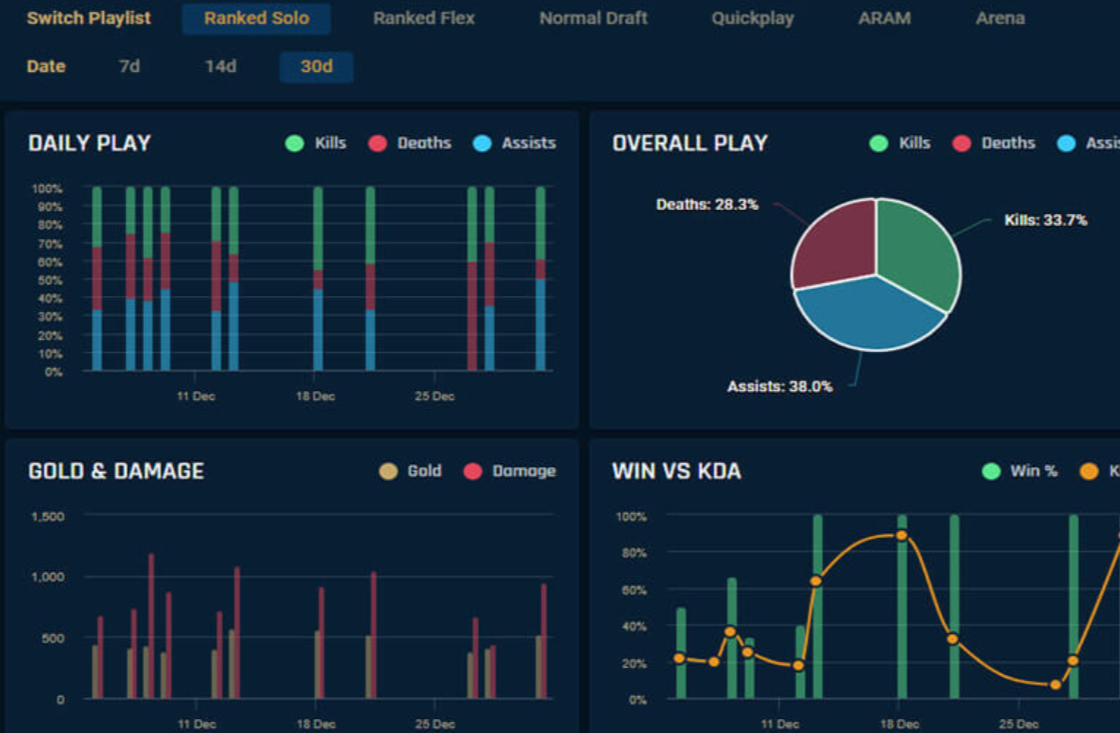
There are three core disciplines that an analyst needs to have and develop.
A Sharp Mind for the Game
This is what typically defines a game analyst: their deep understanding of the game and its mechanics. You understand the game so well and just know how to capitalize on its various characteristics, such as wave management, macro strategy, objective timers, and the shifting meta. You may even be ahead of updates, knowing what’s coming in advance.
Toolkits for Analytics
Data is yours to read, and your tool set is the same as that of a data analyst. SQL for pulling and manipulating databases, Python for analyzing various datasets and statistical modeling, and Power BI or Tableau for presenting your findings through Data Visualization. For modern coaching, knowledge of AI tools is another huge advantage.
Communication
You’re also a master of communicating findings and presenting solutions for problems or stating a plan of action. You can present data confidently and explain how each data point relates to players and their performance. Ultimately, you transform data into actionable plans.
Comparing the Team and Corporate Analyst Roles
Here’s how the paths between a team analyst and a game development analyst compare.
| Category | Team Analyst | Corporate Analyst |
|---|---|---|
| Primary Goal | Win the next match, toward the championship | Improve player experience and business strategy |
| Core Focus | Player performance, opponent scouting, draft strategy | Player behavior, game balance |
| Typical Education | Degree in Sports Analytics, Data Science, or a related field | Degree in Statistics, Computer Science, or Applied Math |
| Key Skills | Deep meta knowledge, VOD review | Statistical modeling, A/B testing, Machine Learning |
Things to Prepare for the Job
The first step is to build a portfolio that demonstrates your analytical capabilities. Take specific matches and break them down into key pieces of information. You can also get official data directly from the Riot Games API and conduct analysis of various matches there. These will serve as your sample data to show off what you’re capable of doing.
You’ll also need to build your network of people. It’s a proven fact that most people who get the job are those who gain approval from the inside. Take advantage of esports events and communities to build connections with various people, from coaches to other analysts, and you may just be paving the way for your first pro analyst role.
How the Hiring Process Works
The next part is to develop a good understanding of the hiring process. First, you need to understand that this process is designed to make it tough for you, so you’ll have to dedicate a lot of effort to make it through.
Here’s a breakdown of the steps you’ll need to take for the hiring process.
- Send your application highlighting your technical skills and deep game knowledge.
- You’ll likely take on a Skills Test, such as one involving an SQL challenge
- A test is usually part of the process, using a sample data set or a sample VOD as the basis for a test report
- An interview is usually the final step, although there could be multiple rounds of this
The Career Outlook for a Pro LoL Analyst

The career of a professional analyst offers growth but also varies by location and experience. You’ll begin as an entry-level analyst handling reports and data preparation. But given time and experience, you’ll enjoy the benefits of growth in your given role.
After you become a mid-level analyst who leads projects and presents data straight to decision-makers, it will feel more like the job you’ve envisioned all this time. After gaining more experience and becoming a senior analyst, you’ll work directly with a head coach when working for a team, or you’ll lead initiatives at a game company such as Riot.
Getting to that level will take time and dedication, and it all starts with how you invest in yourself beginning right now. Master the game by working with your perfect coach and start refining your analytical capabilities for a bright career in LoL analysis.
Arlo is a gaming content writer and analyst covering League of Legends, Valorant, and competitive esports strategy.
All articles by ArloTurn knowledge into rank
Get a verified pro to review your gameplay and give you a plan.