How Does the 2026 VCT and VALORANT Esports Work?
Table of Contents
- VALORANT Champions Tour (VCT)
- The Four International Leagues That Run VALORANT Esports
- How the 2026 VCT Season Works
- Valorant Champions Shanghai, the Biggest Event of the Year
- Challenger Leagues and the New Path to Champions
- VCT Game Changers and the Growth of VALORANT Esports
- What Changes in 2027: The End of the Franchise Era
NRG won the Valorant Champions trophy in Paris last October, taking down Fnatic 3-2 in one of the wildest grand finals VALORANT has ever produced.
That moment came at the end of a ten-month season built across four continents, 48 franchised teams, two Masters tournaments, and a final that peaked at 1.47 million concurrent viewers.
The whole road looks complicated, and here is how the VALORANT esports work heading into VCT 2026.
VALORANT Champions Tour (VCT)

The Valorant Champions Tour, better known as the VCT, is the global competitive esports tournament that Riot Games runs directly. Everything competitive in VALORANT funnels through the VCT.
Riot skipped the usual model of independent tournament organizers fighting for relevance and built every tier of pro play under the VCT. That is why you can follow a single narrative from the January kickoff to the trophy lift in October, which most esports still cannot offer.
The Four International Leagues That Run VALORANT Esports
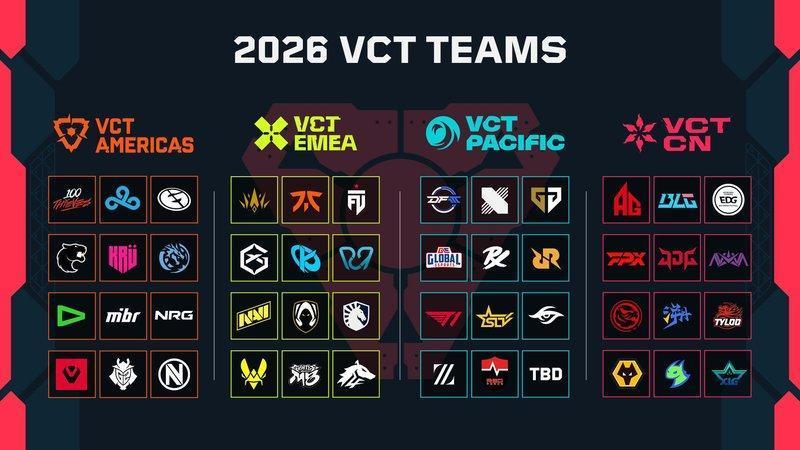
The top of the pyramid splits into four regional leagues. Each one runs as an international league with 12 franchised teams, for a total of 48 top-tier organizations worldwide. Every VCT season revolves around how those teams perform inside their regional home.
VCT Americas
VCT Americas covers North and South America. The 12 teams include Sentinels, 100 Thieves, Cloud9, NRG, LOUD, Leviatán, KRÜ Esports, FURIA, G2 Esports, and Evil Geniuses. Matches are broadcast from the Riot Games Arena in Santa Monica. It is the home of the reigning world champions and, outside of China, the most talent-dense region.
VCT EMEA
EMEA covers Europe, the Middle East, and North Africa and plays out of a second Riot Games Arena in Berlin. Fnatic, Team Liquid, Team Heretics, Team Vitality, Karmine Corp, and Natus Vincere anchor the league. EMEA has produced two of the last five world champions, and Heretics has quietly become one of the most consistent international performers on tour.
VCT Pacific
Pacific covers Asia and Oceania outside of mainland China. DRX, Gen.G, T1, Paper Rex, and ZETA DIVISION headline a league built on aggressive site takes and high mechanical ceilings. Paper Rex, in particular, plays an anti-meta style that has delivered plenty of Masters wins and earned the team a permanent seat in every Champions bracket.
VCT China
China runs its own international league for mainland China. Edward Gaming, which won Champions Seoul in 2024, was the first Chinese team to lift the trophy. FunPlus Phoenix, Bilibili Gaming, and Wolves Esports are among the other Chinese teams chasing a second world title.
A team's year mostly takes place within its international league. That is where the bulk of matches are played, and where spots at Masters and Champions get decided.
How the 2026 VCT Season Works
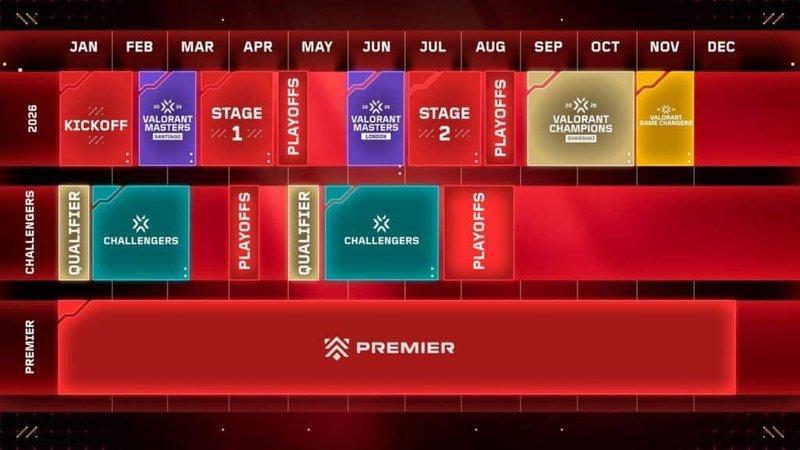
The 2026 VCT season runs from mid-January to mid-October and splits into five main phases.
Kickoff (January to February)
The year opens with Kickoff, a qualifier that uses a triple-elimination bracket. Every team starts in an upper, middle, or lower bracket slot. One loss drops you a level, and a third loss ends your run. The top three teams from each league qualify for Masters Santiago at the end of February.
Masters Santiago (February to March)
Masters Santiago runs from February 28 to March 15 at Espacio Riesco in Chile. It is the first VCT international event ever held in South America, after LOCK//IN São Paulo back in 2023. Twelve teams fly in, three per region, to compete for a $1 million prize pool. The format opens with a Swiss stage, top seeds get a bye, and the back half turns into double-elimination playoffs.
Stage 1 (March to May)
After Masters, the 12 teams in each international league split into two groups of six for Stage 1. Every team plays a round-robin of best-of-three matches across roughly five weeks. The top four from each group advance to the Stage 1 playoffs, and the playoff winners earn their flight to Masters London in June.
Masters London (June)
London hosts Masters 2 from June 6 to June 21 at the Copper Box Arena in Queen Elizabeth Olympic Park, the first VCT event the United Kingdom has ever held. The structure matches Santiago: 12 teams, a $1 million pool, a Swiss stage, and double-elimination playoffs. The winner walks away with the biggest haul of Championship Points in the first half of the year.
Stage 2 (July to September)
Stage 2 is where the season gets loud. The round-robin structure repeats, but the playoffs turn into a global roadshow, splitting stops across São Paulo, Chengdu, Madrid, and Busan.
Stage 2 is also when Challenger teams finally enter the main VCT. Four Challengers teams from each region slot into a double-elimination play-in alongside the bottom four international league teams, and the best survivors fight for a spot at Valorant Champions.
Here is the full VCT 2026 calendar laid out in one place:
| Event | Dates | Location | Teams | Prize Pool |
|---|---|---|---|---|
| Kickoff | Jan 15 - Feb 15 | Regional | 48 | Regional |
| Masters Santiago | Feb 28 - Mar 15 | Santiago, Chile | 12 | $1,000,000 |
| Stage 1 | Mar 31 - May 24 | Regional | 48 | Regional |
| Masters London | Jun 6 - Jun 21 | London, UK | 12 | $1,000,000 |
| Stage 2 | Jun 30 - Sep 6 | Regional + roadshow | 48 | Regional |
| Valorant Champions | Sep 24 - Oct 18 | Shanghai, China | 16 | $2,250,000+ |
Valorant Champions Shanghai, the Biggest Event of the Year
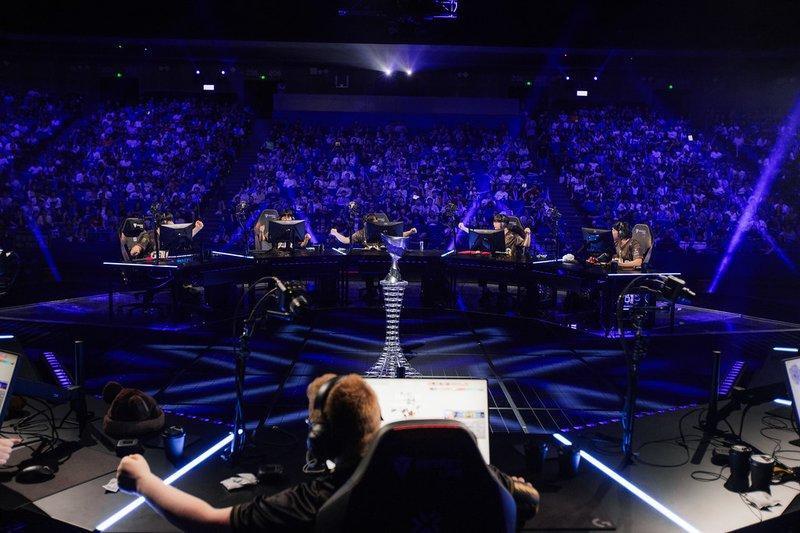
Champions Shanghai 2026 runs from September 24 to October 18 in China. Sixteen teams make it, four per international league, and they fight it out in a cross-regional group stage that feeds into a single-elimination playoff bracket.
The 1.47 million peak viewers during the Paris grand final 2025 make it the third most-watched event in VCT history, behind only Masters Madrid 2024 and Champions 2022. The viewership ceiling keeps climbing every season.
Challenger Leagues and the New Path to Champions
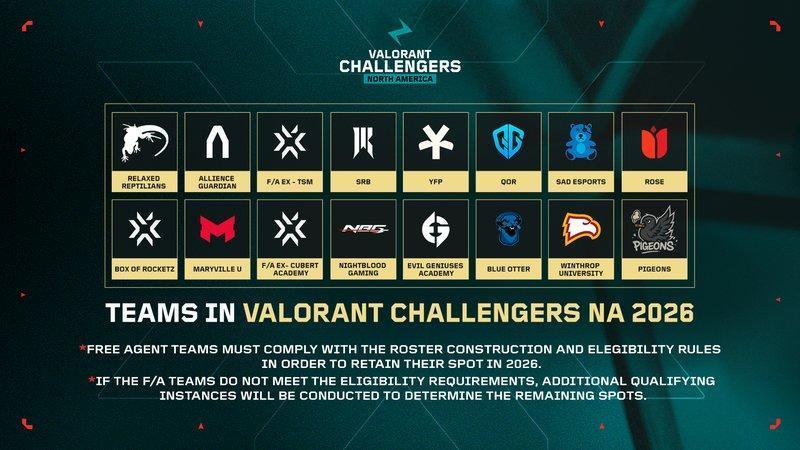
The VCT Challengers Leagues run below the international leagues as regional development circuits, and in 2026, they finally got a direct shot at Champions.
Before this year, Challenger teams had to climb through a separate Ascension tournament to earn a two-year slot in the main VCT. Riot retired Ascension this season.
The top four Challenger teams from each region now feed straight into the Stage 2 international league play-in, giving regional Challenger scenes a seat at the same table as the franchised teams.
If you are chasing that same kind of climb on your own account, getting VALORANT coaching is the fastest way to spot the bad habits separating you from the next rank. The coaches on the platform come from the same grind the pros started on, and a single VOD review can expose more holes in your game than months of ranked.
VCT Game Changers and the Growth of VALORANT Esports

Riot also runs VCT Game Changers, a tournament series dedicated to women and marginalized genders in VALORANT. It runs its own regional splits across EMEA, North America, Brazil, Japan, Korea, Southeast Asia, and Oceania, with the 2026 Valorant Game Changers Championship scheduled for October and November.
Game Changers is a real reason VALORANT esports has outgrown almost every FPS released in the last decade. It gives a legitimate second pipeline into the pro pool, it produces future franchised talent, and it pulls enough sponsorship weight to run what amounts to parallel tier-one events. Shopify Rebellion and Team Liquid Brazil have both built long-running dynasties inside the series.
What Changes in 2027: The End of the Franchise Era
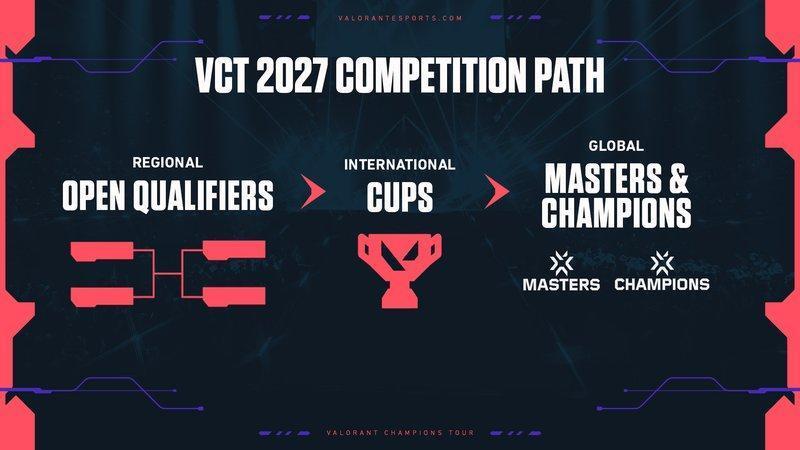
VCT 2027 no longer runs the 2026 franchise system. Riot announced in April 2026 that, starting in 2027, the entire league structure is being tossed out in favor of something completely different: everything is a tournament.
Stage 1 and Stage 2 league play? Gone. In their place, you'll see VCT Cups, open qualifiers that crack the door open for every major event, and one unified tier where everyone competes on the same playing field.
Partner teams still get perks (direct seeding into later qualifier stages, Team Capsule revenue, and a guaranteed base payment), but they no longer get an automatic path to global events without performing in the qualifiers.
Turn knowledge into rank
Get a verified pro to review your gameplay and give you a plan.