CS2 Ranks, Premier Rating, and Competitive System Explained (2026)
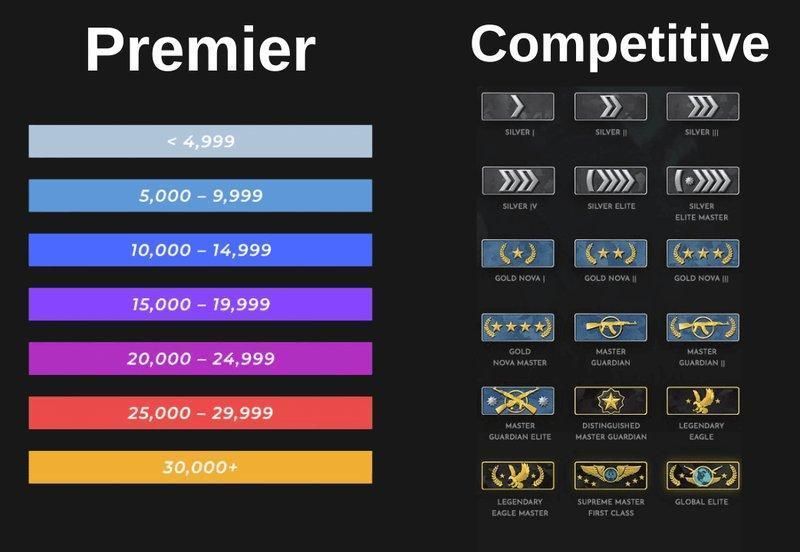
Table of Contents
- CS2's Two Ranking Systems in 2026
- All 18 CS2 Competitive Ranks in Order
- CS2 Competitive Map Rank Distribution
- How the CS2 Premier Rating System Works
- CS2 Premier Rating Tiers Explained
- CS2 Premier Rank Distribution
- CS2 Season 4, the Leaderboard Reset, and the New Map Pool
- Premier Season Medals and How Rewards Work
- Premier or Competitive: Which CS2 Mode Should You Play?
- Tips to Rank Up Fast in CS2
Two ranking systems, seven color tiers, eighteen competitive ranks, and a Premier rating reset that wiped every leaderboard on January 21, 2026.
Here is how the CS2 ranks and rating system actually work in 2026, who sits where on the ladder after the Season 4 reset, and why your Premier number matters more than the old Silver to Global Elite climb.
CS2's Two Ranking Systems in 2026
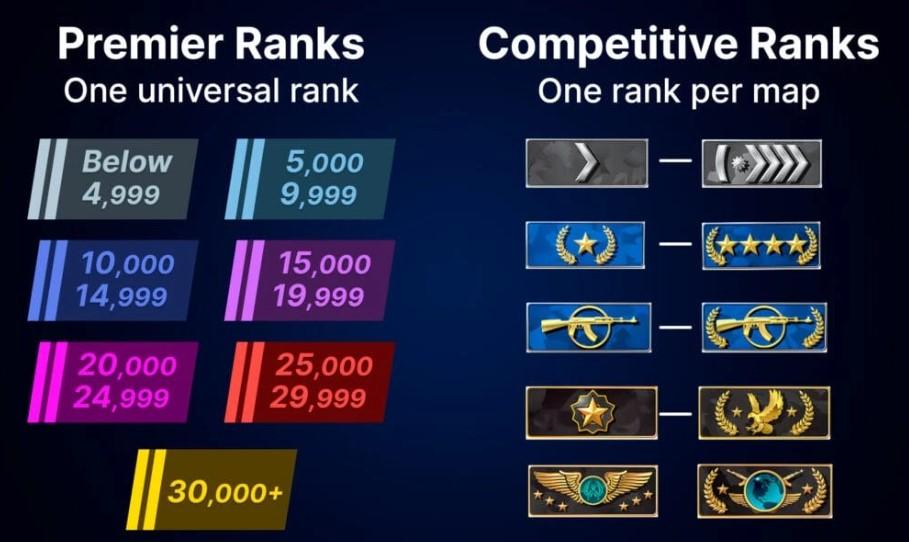
Counter-Strike 2 features two separate ranking systems running side by side, on the same account. We'll walk you through both in detail in the next few sections.
Competitive mode carried over the classic 18 skill groups from CS:GO, the same Silver through Global Elite ladder that defined matchmaking for over a decade. Premier mode replaced that ladder with a numerical CS rating that runs from roughly 1,000 to well past 40,000.
The old skill group system is still around, but it is no longer the main event. Competitive ranks live inside each individual map, which means you can be a Master Guardian on Mirage and still sit at Silver Elite on Ancient. Premier is universal. One rating follows you across every map in the active pool, and that number adjusts every time you queue a match.
This two-headed setup is why the community cannot agree on what “my rank” actually means in CS2. Valve has quietly made Premier the flagship mode, tied global leaderboards and seasons to it, and built the new matchmaking pool around ratings rather than skill groups. If you care about measuring your real CS2 skill in 2026, Premier is the honest answer. Competitive is still where you go to grind a specific map with lower stakes attached.
All 18 CS2 Competitive Ranks in Order
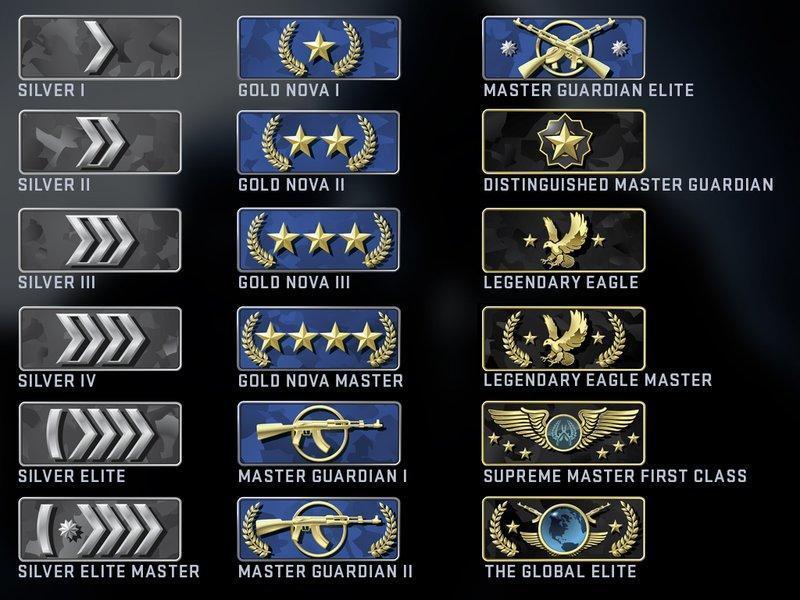
The 18 competitive ranks are the direct descendants of the CSGO matchmaking system, carried over almost untouched. Valve bundles them into six skill group tiers, each with its own cluster of ranks and player population. The ladder starts at Silver I at the bottom and finishes at Global Elite at the top, with every rank applied per map rather than per account.
CS2 Competitive Map Rank Distribution
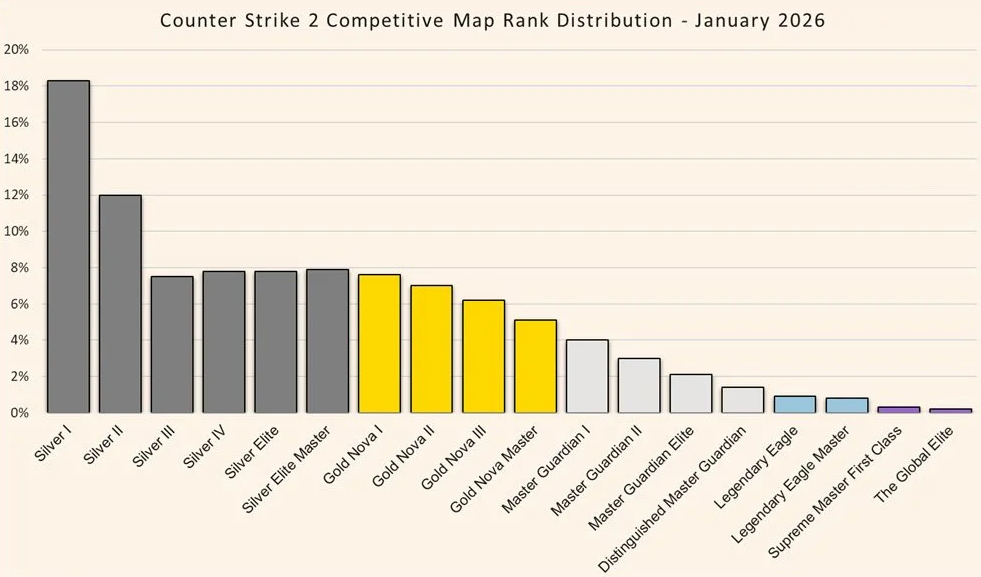
| Rank | Tier Group | Approx. Distribution (Jan 2026) |
|---|---|---|
| Silver I | Silver | 18.3% |
| Silver II | Silver | 12.0% |
| Silver III | Silver | 7.5% |
| Silver IV | Silver | 7.8% |
| Silver Elite | Silver | 7.8% |
| Silver Elite Master | Silver | 7.9% |
| Gold Nova I | Gold Nova | 7.6% |
| Gold Nova II | Gold Nova | 7.0% |
| Gold Nova III | Gold Nova | 6.2% |
| Gold Nova Master | Gold Nova | 5.1% |
| Master Guardian I | Master Guardian | 4.0% |
| Master Guardian II | Master Guardian | 3.0% |
| Master Guardian Elite | Master Guardian | 2.1% |
| Distinguished Master Guardian | Master Guardian | 1.4% |
| Legendary Eagle | Legendary Eagle | 0.9% |
| Legendary Eagle Master | Legendary Eagle | 0.8% |
| Supreme Master First Class | Supreme | 0.3% |
| The Global Elite | Global Elite | 0.2% |
How the CS2 Premier Rating System Works
Premier uses an Elo-style calculation instead of a skill group. Your CS rating is a single number that moves after every match based on two confirmed factors: the win or loss and the opponent team's average rating relative to your own. Besides those, the community widely speculates that Valve’s Premier rating formula also includes the round differential. For example, a gritty 13-11 win against a weaker team gives you a modest rating bump. A 13-3 curb stomp against a higher-rated team gives you a big one. Losses work in reverse.
Before you see a rating at all, you have to clear 10 placement matches. Those games put you into a provisional pool where the system watches your kills, your round impact, and the quality of teams you beat, then generates a starting CS rating somewhere between roughly 1,000 and 22,000. Most first-time Premier players land between 5,000 and 10,000 after placements, which puts them in the Light Blue tier.
Once you have a rating, every match updates it. Unlike competitive mode, where a skill group change is hidden behind a vague upgrade graphic, Premier shows you the exact number and the exact delta after each match. That transparency is the single biggest quality-of-life upgrade Valve has pushed to CS matchmaking in the last decade.
Premier also has a map ban system that competitive does not. Before every Premier match, both teams take turns banning and picking from the active duty pool, and whichever map survives gets played. Competitive mode still locks you into a single map the moment you queue. That map ban phase alone makes Premier feel closer to professional CS.
CS2 Premier Rating Tiers Explained
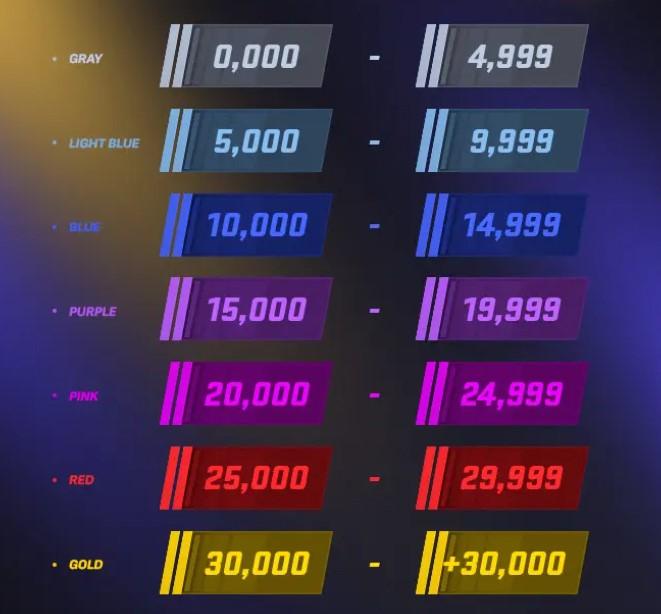
Premier splits the full rating range into seven color tiers:
- Gray (0 to 4,999)
- Light Blue (5,000 to 9,999)
- Blue (10,000 to 14,999)
- Purple (15,000 to 19,999)
- Pink (20,000 to 24,999)
- Red (25,000 to 29,999)
- Gold (30,000+)
CS2 Premier Rank Distribution
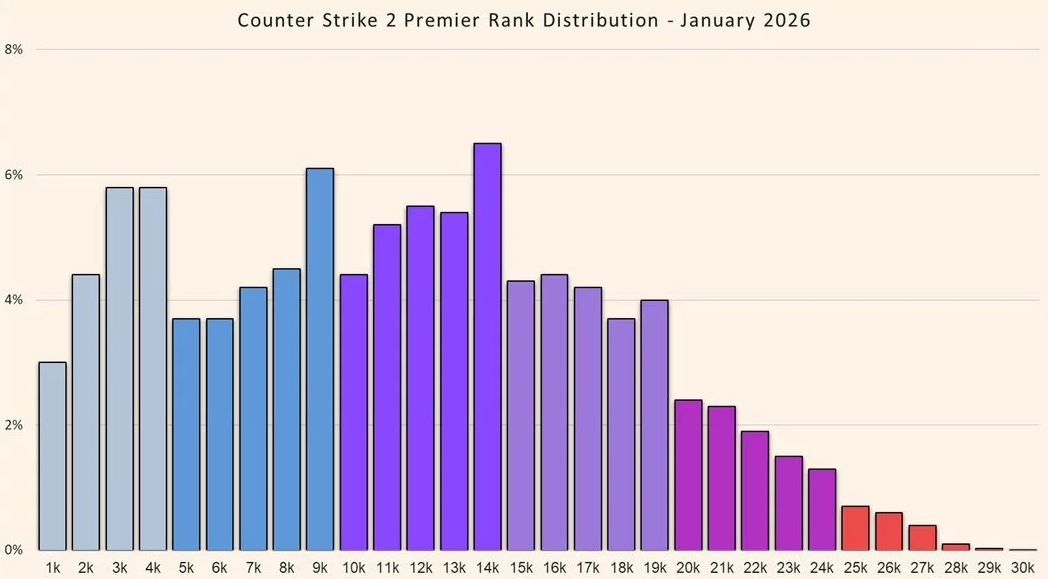
- Gray (0 to 4,999): roughly 19.7% of active Premier players
- Light Blue (5,000 to 9,999): 23.9%
- Blue (10,000 to 14,999): 27.1%
- Purple (15,000 to 19,999): 16.2%
- Pink (20,000 to 24,999): 4.4%
- Red (25,000 to 29,999): 1%
- Gold (30,000+): 0.01%
The distribution bunches hard at the bottom. The average Premier rating in January 2026 is around 11,000, which lands in the middle of the Blue tier.
Regional distribution matters too. Europe's Premier pool is larger than North America's across the whole curve. If your account was placed in EU West or EU East, expect the grind past 20,000 to feel noticeably sharper than anything you would find queueing out of NA. Smurfs skew the bottom of both regions, which is why brand new accounts queueing their first ten Premier placements will occasionally run into a 4k rating opponent.
CS2 Season 4, the Leaderboard Reset, and the New Map Pool
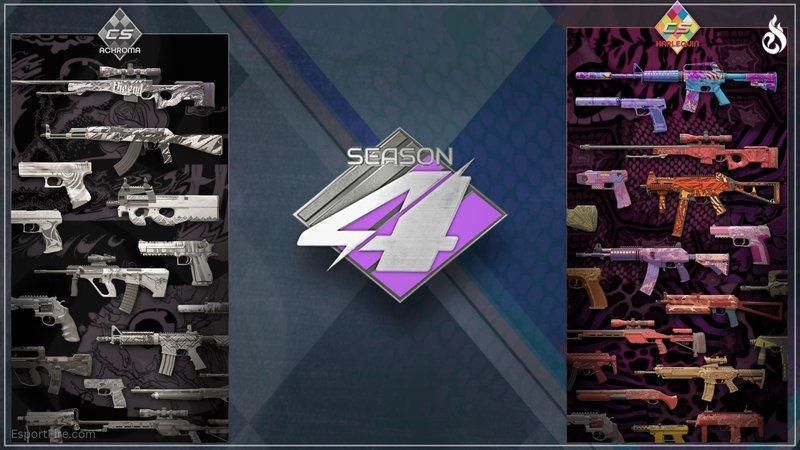
Premier Season 4 launched on January 21, 2026, with a full rating reset, a refreshed active duty map pool, and a fresh leaderboard that starts over every season. The reset meant every player had to play 10 placement matches before a new CS rating appeared on their profile.
The Season 4 active duty pool now looks like this:
- Ancient
- Anubis
- Dust II
- Inferno
- Mirage
- Nuke
- Overpass
Premier Season Medals and How Rewards Work

Premier season medals are the only ranked reward Valve hands out for climbing in CS2. Unlike Valorant or Marvel Rivals, there are no seasonal skins, no namecard borders, and no weapon charms tied to a rating bracket.
To unlock a season medal, you need at least 25 Premier wins during the season while holding an active CS rating. Every additional 25 wins after the first threshold adds a bar to the medal, up to a maximum of five bars for players who grind through 125 or more Premier victories in a single season. The medal color reflects the highest rating tier you hit during the season, not the rating you end on, so peaking at 25k Red for one week still locks in a Red medal even if you fall back to Purple before the season closes.
Premier or Competitive: Which CS2 Mode Should You Play?
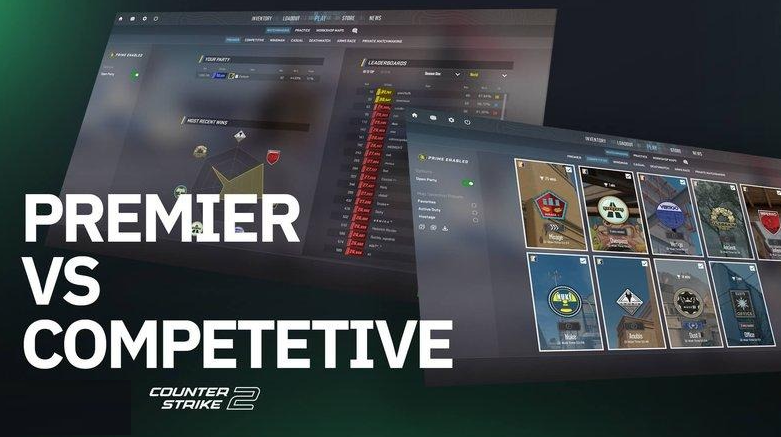
If you want to know your real CS2 rank, queue Premier. It is the mode Valve actively updates, the mode the leaderboards are built around, and the mode that gives you a single honest number across every map in the active pool. Pro players flex Premier ratings, streamers argue about Premier ratings, and the community treats Premier as the default shorthand for “how good are you, actually.”
Competitive mode is still useful when you want to grind a specific map without ban phases, stakes, or a lobby full of tryhard opponents. Competitive is the casual ranked mode now. It is where you go to practice or try out new tactics.
The two systems do not talk to each other. Climbing in one does not move you in the other.
Tips to Rank Up Fast in CS2
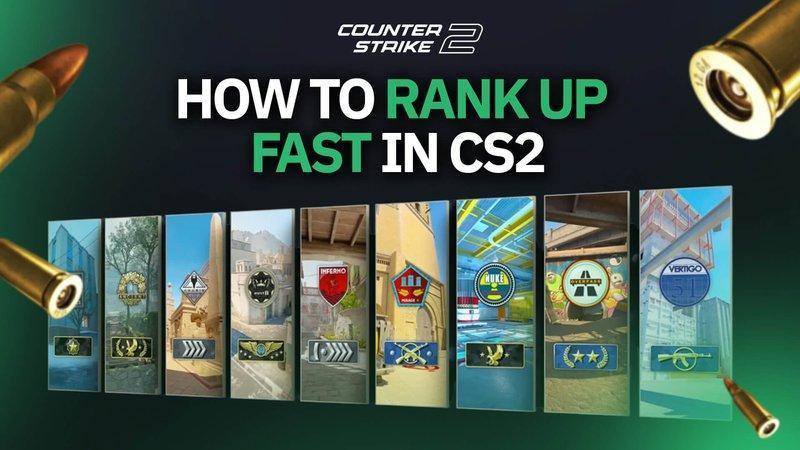
Nobody climbs out of Gray tier by only watching YouTube. But nobody climbs out of it by queueing blind, either. Here are the habits from players who actually rank up in CS2.
Focus on two maps, not seven. Premier's map ban phase means you can learn two maps cold and ban the other five every single match. Players who try to be okay on every map end up average everywhere. Pick two, grind the callouts, grind the utility, and ban the rest without guilt.
Fix crosshair placement before your aim. Pros hit flick shots on Twitch clips. Blue tier players hit flick shots because they never placed their crosshair at head height on the angle the enemy was about to round.
Watch your own demos. CS2's demo system lets you replay any ranked match from any angle. Watching three rounds where you died stupidly will teach you more than a week of aim trainer drills. If reviewing your own demos keeps showing the same mistakes, booking a session with a CS2 coach on WeCoach is the quickest way to get an honest external read on what is actually eating your round impact.
Mute the complainers early. The minute a teammate starts typing paragraphs instead of calling rotations, mute the chat and play the round.
Warm up with a deathmatch and one grenade lineup. Five minutes of DM and one new utility setup per session is enough most of the time. Most first-match losses in Premier come down to cold aim and cold lineups, not skill gaps.
Queue with one consistent duo, not five random friends. Premier puts your team's average rating into the opponent calculation, so queueing as a five-stack with a massive rating spread usually drops you into lobbies that punish whichever end of the spread is weakest. Duo queues land in the cleanest matchmaking pools, and one reliable partner who knows how to trade your entries is worth more rating per session than any aim trainer routine.
Barry is a gaming writer and former high-elo player covering coaching tips, champion guides, and esports news.
All articles by BarryTurn knowledge into rank
Get a verified pro to review your gameplay and give you a plan.