
Wild Rift Ranks and Ranking System in 2026

Table of Contents
- Wild Rift Ranks in Order: Every Tier and Division from Iron to Sovereign
- How the Wild Rift Ranking System Works
- Ranked Fortitude and the Ranked Loss Shield
- Master, Grandmaster, Challenger, and Sovereign
- Legendary Queue in Wild Rift
- Queue Restrictions and Party Sizes in Ranked Games
- Ranked Rewards in the Current Season
- How to Climb Without Wasting Your Time
Glorious Eminence Jax landed as the Season 21 ranked skin on April 10, and every queue from Iron IV to Sovereign is already grinding for it. Wild Rift's ranking system looks familiar, but dig an inch below, and nothing behaves like PC League of Legends.
Marks instead of LP. Loss Shields instead of demotion protection. A Legendary Queue behind Master rank. And as of Patch 7.1, the climb itself feels different thanks to cheaper boots and a fresh round of champion tuning.
Here is how the full ladder, legendary queue, ranked fortitude bar, and every corresponding system actually work in the current season.
Wild Rift Ranks in Order: Every Tier and Division from Iron to Sovereign
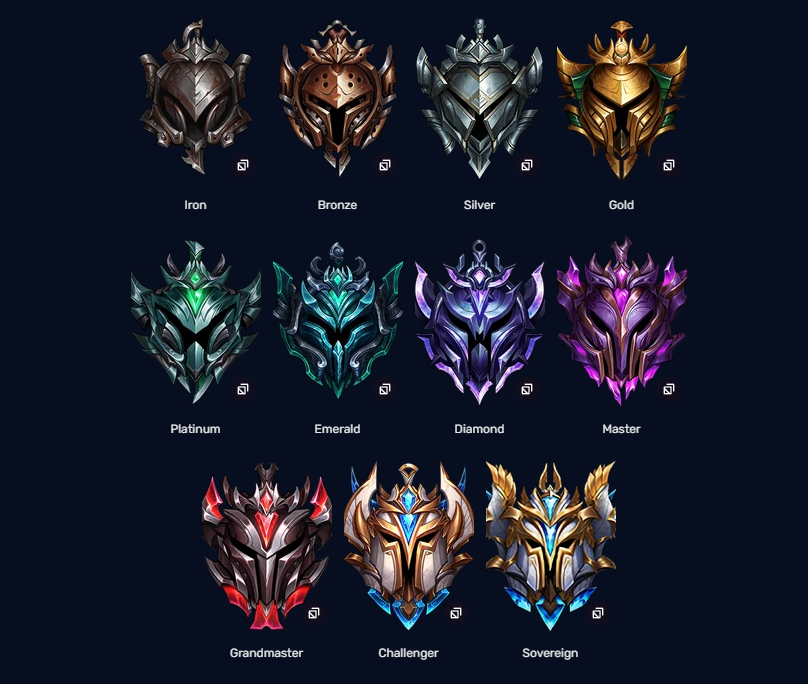
Eleven tiers now make up the Wild Rift ranking system. Riot added Sovereign in Season 10, July 2023, specifically to clean up the inflation choking the top of the ladder, and the full list sits in this order:
- Iron
- Bronze
- Silver
- Gold
- Platinum
- Emerald
- Diamond
- Master
- Grandmaster
- Challenger
- Sovereign
Iron through Diamond, each split into four divisions, with IV being the lowest and I the highest. Master and Grandmaster drop to three divisions each. Challenger and Sovereign are flat, leaderboard-only tiers where the only thing separating you from the next name is ranked marks and a dozen clean games.
Players gain 1 ranked mark per victory and lose 1 ranked mark per defeat. Defeat in Iron and Bronze won’t lose you any marks.
For a quick visual summary of the rank mechanics:
| Rank Tier | Divisions | Ranked Marks Per Division | Ranked Marks Penalty |
|---|---|---|---|
| Iron | IV to I | 2 | None (no marks lost on defeat) |
| Bronze | IV to I | 3 | None (no marks lost on defeat) |
| Silver | IV to I | 3 | -1 mark per loss |
| Gold | IV to I | 4 | -1 mark per loss |
| Platinum | IV to I | 4 | -1 mark per loss |
| Emerald | IV to I | 5 | -1 mark per loss |
| Diamond | IV to I | 6 | -1 mark per loss |
| Master | III to I | 1 | -1 mark per loss, -1 mark per 7-day inactivity decay |
| Grandmaster | III to I | 30 | -1 mark per loss, -1 mark per 7-day inactivity decay |
| Challenger | Flat tier | 60 | Leaderboard drop, -1 mark per 7-day inactivity decay |
| Sovereign | Flat tier | 100 | Leaderboard drop, daily reset, -1 mark per 7-day inactivity decay |
How the Wild Rift Ranking System Works

Wild Rift's ranked queue runs on Ranked Marks instead of LP. Every win earns a mark. Every loss takes one away. Hit the number required for your current division, and you automatically bump up. Miss a mark while sitting on zero, and you drop down. No LP math, no mental league points calculator required, and no random bonus points handed out for playing well.
Two early-tier exceptions soften the system for new players. In Iron and Bronze, losing matches never costs you a mark, so low-rank grinders can learn fundamentals without bleeding progress on every tilt game. Once you hit Silver, the safety net comes off.
Ranked Marks Per Division
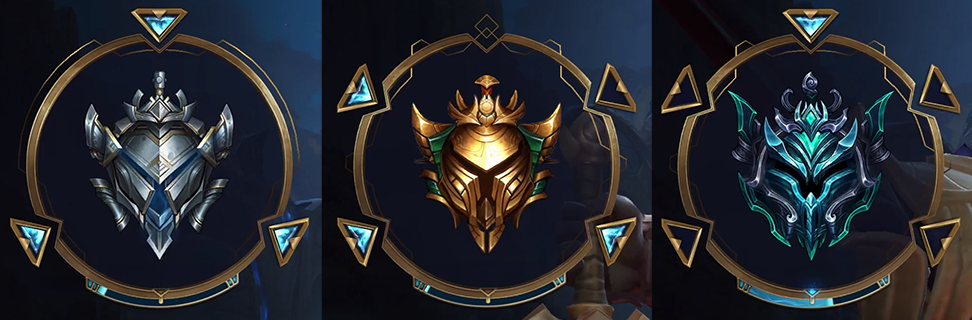
The number of ranked marks per division scales up as you climb:
- Iron: 2 marks
- Bronze: 3 marks
- Silver: 3 marks
- Gold: 4 marks
- Platinum: 4 marks
- Emerald: 5 marks
- Diamond: 6 marks
Iron to Bronze takes maybe an afternoon. Silver to Gold and Gold to Platinum feel noticeably grindier once losses start to cost you. Platinum to Emerald is the first real wall for most of the player base, and Emerald to Diamond feels like a different game entirely, thanks to the draft pick/ban layer and the noticeably better communication baseline at that rank tier.
No Placement Match, No Promotion Series
There is no placement match in Wild Rift. Your first ranked queue of the season is not a five-match audition, and there is no hidden MMR calibration phase. You start your ranked climb instantly when you hit play.
Wild Rift also removed the promotion series. No best-of-three to advance between tiers, no one-game coin flip locking you out of Gold. Earn the final mark, and you'll be promoted. It is the single cleanest UX improvement the team has shipped since launch.
Ranked Fortitude and the Ranked Loss Shield

Ranked Fortitude is the system Riot built to stop ranked from feeling miserable. Every time you win or play a clean, team-oriented match, the fortitude bar below your rank portrait fills up. Cap the bar, and your next defeat does not cost you a Ranked Mark. That is the ranked loss shield, and it is the single most forgiving mechanic in any mobile MOBA ranking system right now.
The fortitude cap scales with your tier:
- Iron: 200
- Bronze: 300
- Silver: 400
- Gold: 600
- Platinum: 800
- Emerald: 1,000
- Diamond and above: 1,200 weekly cap
Fortitude generation resets every Monday at 00:01 UTC. The weekly ceiling tops out at 1,200 across all tiers, and fortitude scales with the effort you put into each game. Warding, pinging objectives, taking jungle camps when they are free, and finishing matches without an AFK streak pumps the bar. Inting, rage-quitting, or racking up negative behavior reports slows it down.
In practice, the fortitude system is what allows a player to turn a losing streak into a rebound without losing ground. Save your shields for games where a bad teammate throws the lead, not for matches where you are the throw.
Master, Grandmaster, Challenger, and Sovereign
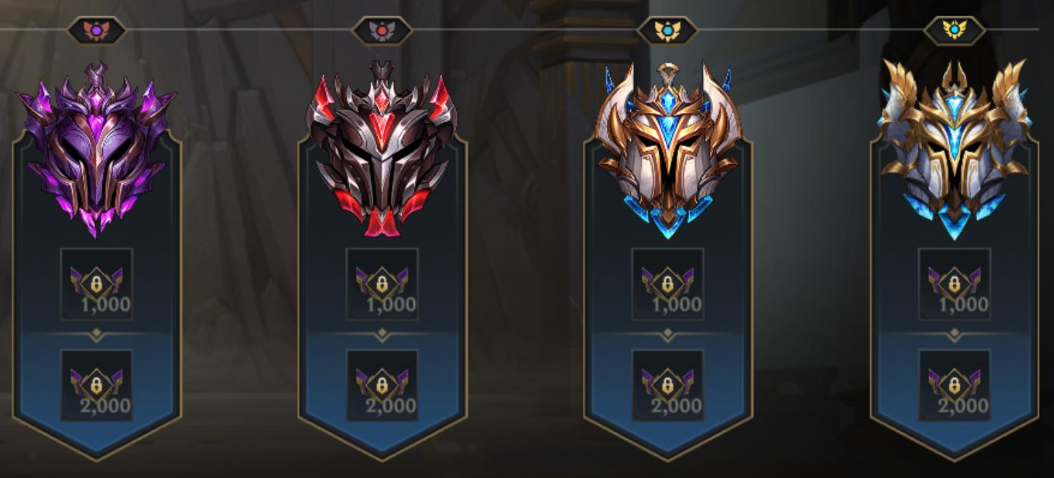
The top tiers work a bit differently. There are no divisions here. Instead, you'll need to rack up a lot more Marks to climb to the next rank.
| Tier | Minimum Ranked Marks |
|---|---|
| Master | 1 |
| Grandmaster | 30 |
| Challenger | 60 |
| Sovereign | 100 |
And if you do make it to Sovereign, the grind doesn't stop there. Your Ranked Marks keep stacking up because the best players in the region are all fighting for a spot on the leaderboard, which resets every single day.
Legendary Queue in Wild Rift

Legendary Queue is the dedicated solo ladder Riot built for players who actually belong above Master. Standard ranked above Master gets messy: duo inflation, trio carries, regional MMR drift. LQ was the team's answer.
The entry wall has two locks:
- Hit Master in the current ranked season
- Hold a Champion Mastery score of at least 1000 legendary points on the champion you plan to play (this threshold has ticked up in some regions, but 800 is the baseline)
Once you unlock LQ, you keep access as long as your standard rank does not drop below Diamond. Drop to Emerald, and you have to climb back to Diamond before you can re-queue legendary. LQ also runs a distinct MMR from standard ranked, so a bad LQ night will not damage your main rank.
Legendary Queue has five progression tiers:
| Tier | Legendary Points |
|---|---|
| Legendary Commander IV–I | 800–1599 |
| Legendary Master IV–I | 1600–2399 |
| Legendary Grandmaster IV–I | 2400–3199 |
| Legendary Challenger IV–I | 3200–3999 |
| Legend | 4000+ |
Every division except the final Legend rank costs 200 Legendary Points to clear. At the end of every LQ match, you'll either gain or lose Legendary Points (LP) depending on how you played, along with a few other factors. Stack up enough points, and you'll move up to the next tier or division. Drop too many, and you'll slide back down. Simple as that.
The first time you queue up for Legendary Queue, you'll start out at 800 LP (Commander IV). Where you take it from there is entirely up to you.
The queue is solo only. No duos, no trios, no premade cheese. That is the whole design principle. LQ is a pure measurement of individual skill and decision-making. That separation was explicitly the goal when Riot shipped the Legendary Queue dev post, laying out the redesign.
The top 100 players in your region earn a spot on LQ's public leaderboards. Check out who you're up against, or better yet, fight your way onto the list yourself.
Queue Restrictions and Party Sizes in Ranked Games
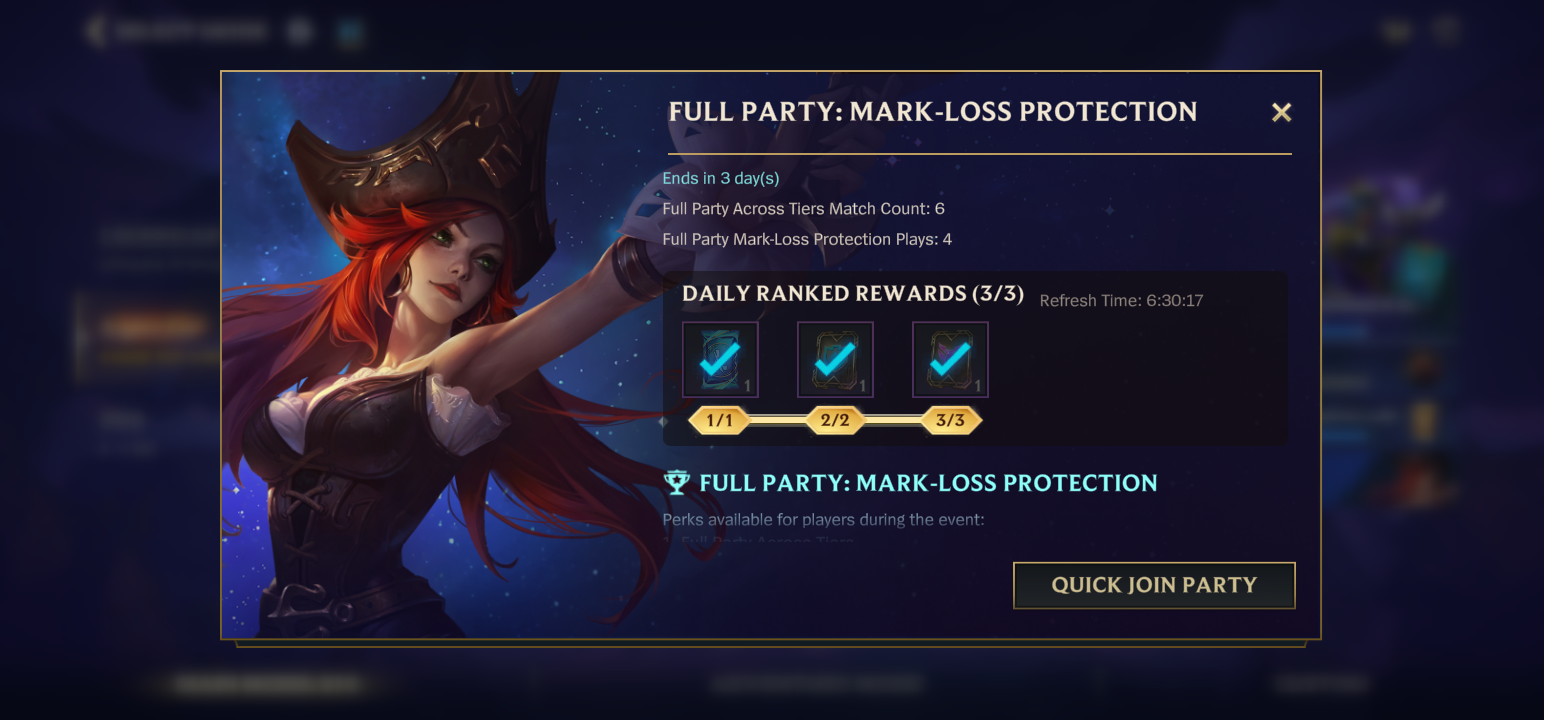
Wild Rift's ranked queue is flexible. You are able to queue as a solo, duo, trio, or full five-stack. Four-stacks are locked to Normal queue only, not Ranked. Riot capped 4-stacks out of ranked because a lone solo paired with a four-party creates matchmaking chaos that the system has never cleanly solved.
At higher tiers, solo, duo, and trio parties face tighter matchmaking windows than 5-stacks do. Five friends can realistically be matched against five friends, whereas a trio has to be stitched together with randoms, which shrinks the pool and stretches queue times. If you are climbing with a duo partner in Diamond or above, expect slower queues and longer breaks between games than pure solo players get.
Ranked Rewards in the Current Season

Season 21 went live on April 10, 2026, and runs through July 8, 2026. The season's exclusive ranked skin is Glorious Eminence Jax, part of the long-running Glorious Eminence line Riot reserves entirely for ranked completion. You cannot buy it in the store, trade it in a reward capsule, or pull it from a loot bag. You have to hit the required tier during Season 21 to earn it.
Season 21 also expanded the Rising Star reward track to include Diamond for the first time. In prior seasons, Rising Star capped out before Diamond, which meant Diamond grinders walked away with bragging rights and little else. Now, Diamond players pick up a full exclusive cosmetic bundle tied to their climb.
The wider Season 21 ranked rewards pool includes:
- Tier-specific borders
- A rank icon tied to your peak placement
- A ranked-season emote
- Title cards and profile banners
- Bonus champion fragments tied to your final division
Hit Master or above and the Legendary Queue layers on its own exclusive icon, border, and banner for your LQ tier placement. Every season's LQ cosmetics rotate, so the Season 21 set will only ever be earnable during S21.
How to Climb Without Wasting Your Time

Patch 7.1 changed the early game enough that old climbing habits do not apply cleanly. Boots now cost 900 gold across the board, tier-2 upgrades come noticeably later, and the new Lord Dominik's Regards at 3,300 gold finally gives ADCs a real answer to tank-stacked frontlines. Runes got the biggest overhaul since Patch 5 with Ice Overlord, Guardian, Battle Zeal, and Hubris joining the keystone pool.
Here is what that means for the climb:
- Lane bullies got trimmed. Irelia, Fiora, Yasuo, and Renekton all took sustain or damage nerfs. In Iron through Platinum, counterpicking them is finally a reasonable plan again.
- Tank stacks are vulnerable. If you are an ADC main, buying Lord Dominik's into a double-tank frontline swings the 25 to 30 minute window back in your favor.
- Vision still decides Platinum and below. Mechanics get the credit, but warding patterns and objective priority determine who climbs out of Gold.
- Boot timings are worth re-learning. If you are still rushing tier-2 boots at the same gold threshold you did in Patch 7.0g, you are missing a core item window.
If you are stuck at the Platinum-to-Emerald wall and your fortitude bar is permanently empty, the fastest unstuck is a VOD review. One hour with a Challenger-tier coach from WeCoach Wild Rift coaching service will expose habits you do not know you have: wave states you are misreading, jungle pathing you are ignoring, teamfight angles you are taking at the wrong time. The Emerald wall does not care how many games you play. It cares how well you play them.
Season 21 runs through July 8, which gives you roughly three months to turn the new patch, the new ranked skin, and your actual free time into a rank worth showing off. But the knowledge you gain from coaching and practicing with a purpose stays with you for years on.
Barry is a gaming writer and former high-elo player covering coaching tips, champion guides, and esports news.
All articles by BarryTurn knowledge into rank
Get a verified pro to review your gameplay and give you a plan.