The Hearthstone Ranked System Explained

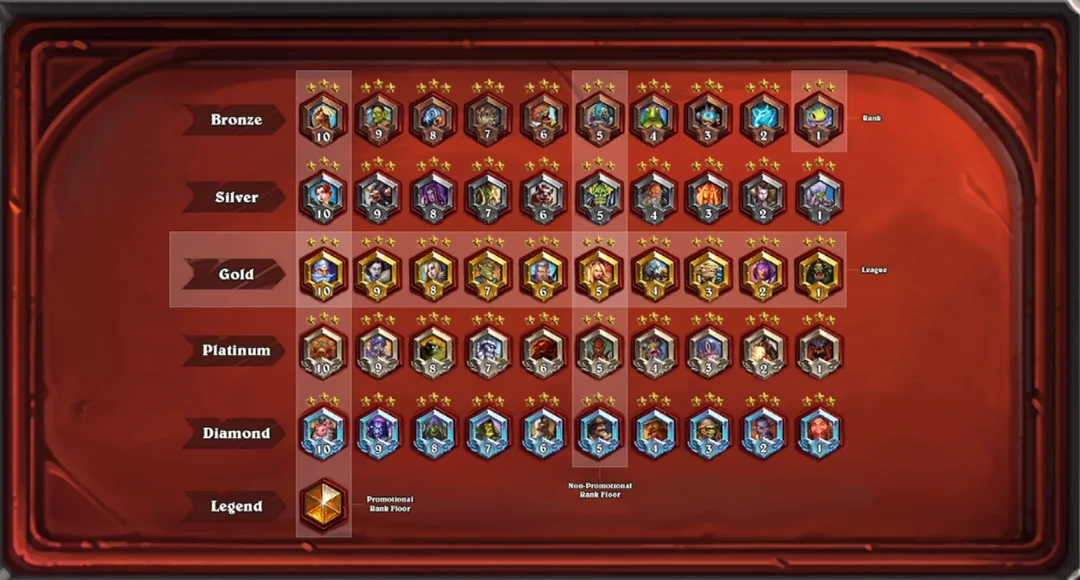
Table of Contents
Every Hearthstone player knows this feeling: You’re just one win from Diamond 5, but the ladder is throwing tier-one netdecks at you like it’s personal. Then, before you can react, the season flips, your rank evaporates, and you have to do it all again.
Tiring… But there’s a silver lining to the whole Hearthstone rank system. Once you understand how stars, star bonuses, and hidden MMR fit together, the grind will feel like a fun puzzle you can solve.
The Hearthstone Ranked Ladder
Compared to the slow progression of other war games online, the Hearthstone ranked ladder is entirely different. Here, there are no armies to rebuild overnight; instead, just a fresh stack of stars and a ladder that regularly updates based on how you play.
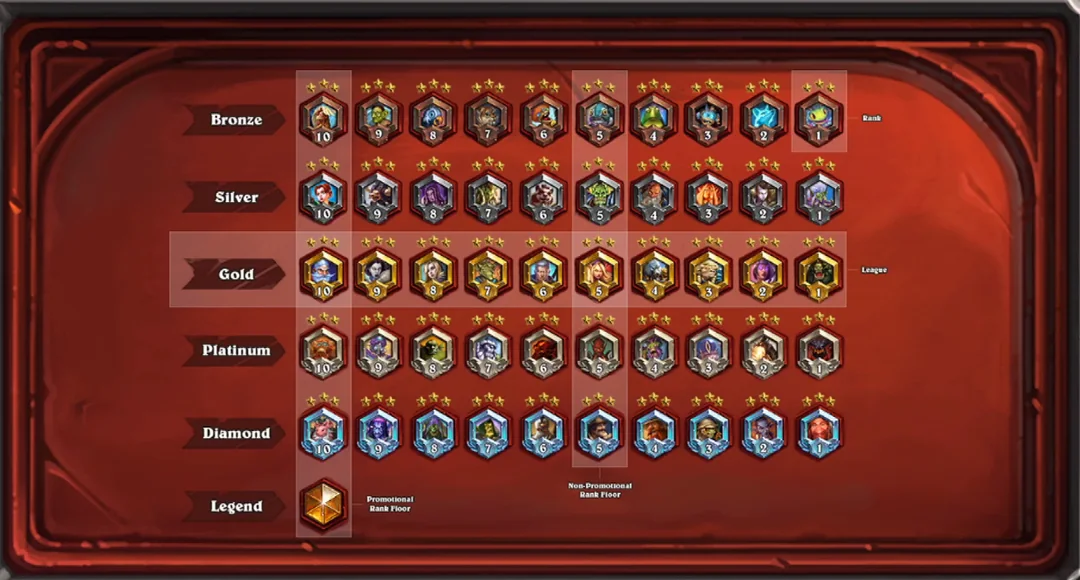
50 Ranks Across Five Leagues
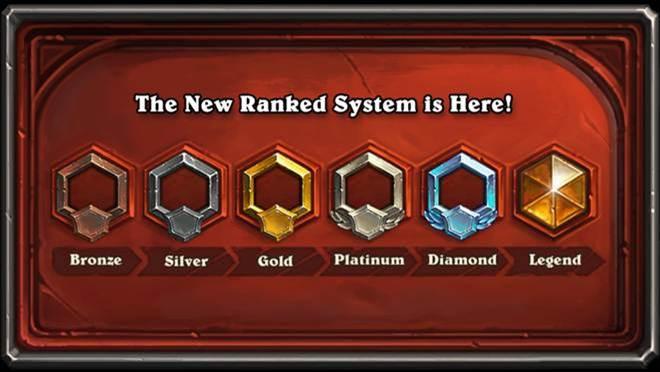
The ranked ladder is built from five core leagues stacked on top of each other:
- Bronze
- Silver
- Gold
- Platinum
- Diamond
Each league holds 10 numbered ranks that count down from 10 to 1. You start a fresh season at Bronze 10 and grind toward Bronze 1, then cross into Silver 10 and repeat the pattern.
Five leagues x 10 ranks gives you 50 ranks of numbered climbing before the ladder runs out of numbers entirely. What sits above Diamond 1 has no number at all, and we’ll get into that shortly.
New accounts do not start on this ladder at all. Blizzard swapped the old block of pre-Bronze new player ranks for the Apprentice League back in patch 28.2, which is a fully guided experience that hands out Gold, Catch-Up Packs, and Starter Decks while the Tavern Guide teaches the core systems.
Only after clearing that track does a new player land at Bronze 10 and join everyone else on the real ladder. Here is the whole thing at a glance, along with the head start you earn for next season based on where you finish this one:
| League | Ranks | Minimum Star Bonus for next season |
|---|---|---|
| Bronze | 10 down to 1 | 2x |
| Silver | 10 down to 1 | 2x to 3x |
| Gold | 10 down to 1 | 4x to 5x |
| Platinum | 10 down to 1 | 6x to 7x |
| Diamond | 10 down to 1 | 8x to 9x |
| Legend | Single numbered rank, the top tier after passing Diamond 1 | 10x (11x at high Legend) |
Remember, those multipliers are minimums. The quiet machinery that decides how far above them you actually start (your hidden MMR) has its own section.
One thing that trips up newer players: Ranked Standard and Ranked Wild each run their own separate ladder. This means your shiny Diamond gem in Standard means nothing to your Wild rank. They track, reset, and reward independently, so treat them as separate climbs. And if you play the rotating Twist format, that one runs a third ladder of its own on the same structure.
Stars and Win Streaks Bonus
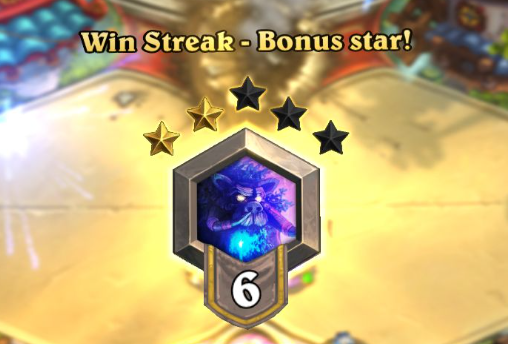
Every rank works the same math: each rank has three star slots, so three stars fill it and bump you up to the next one. Win a game, earn a star. Lose a game, lose a star. Fill all three slots at Silver 4, and you are promoted to Silver 3. It is honest, readable, and the most intuitive part of the entire system.
The wrinkle that makes climbing feel great is the win streak. Win three ranked matches in a row (draws do not count and do not break the streak), and every win after that pays out double stars until you finally drop one.
Two stars per win instead of one turns a hot session into an elevator ride. String six or seven games in a row together and you can vault through an entire league in a single sitting.
There is a catch, though: win streak bonuses switch off the moment you reach Diamond 5. From that floor up through Legend, a win is worth exactly one star, no exceptions, because Blizzard does not want streaky play inflating the top of the ladder.
Star Bonuses
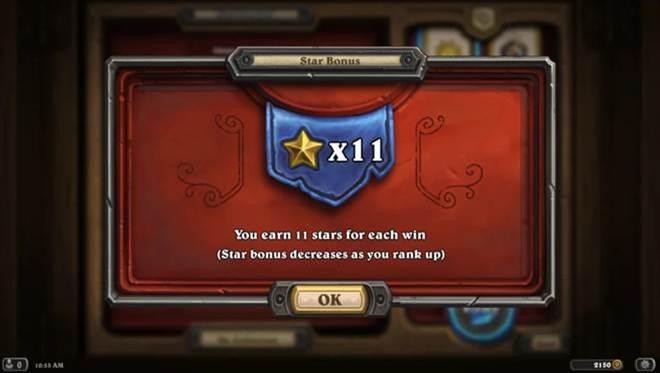
At the start of every season, you get a multiplier stapled to every win. A 10x Star Bonus means your first win of the month is not worth one star; it is worth ten, which is enough to blow through three full ranks in a single game. That multiplier is not random. It is set by the highest rank you reached last season, floored by your hidden MMR, using the scale in the table above.
For example, Legend players come back with a 10x bonus, high Legend grinders get 11x, and someone who topped out in Gold gets 4x or 5x. Then it bleeds off as you climb: every time you cross a rank floor, the bonus drops by one.
So a 10x Star Bonus pays 10 stars at Bronze 10, 9 at Bronze 5, 8 at Silver 10, and keeps ticking down until it lands on 1x right around Diamond 5. The whole overhaul was designed around this idea: get good players back to their real rank fast, then make everyone earn every rung above it.
Rank Floors
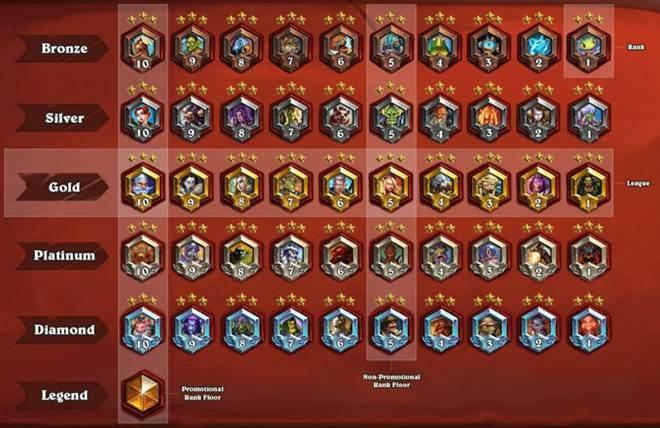
A rank floor is exactly what it sounds like: a rank you cannot fall below once you reach it. Floors sit at every fifth rank, meaning the 10 and the 5 of each league, so Bronze 10, Bronze 5, Silver 10, Silver 5, and on up the ladder.
Hit Gold 10, and you are locked into Gold for the rest of the season, no matter how ugly your next twenty games get. You can still lose stars inside a league and slide from Gold 3 back down to Gold 5, but that Gold 5 floor holds firm.
This matters more than most newer players realize. The league-entry floors (Silver 10, Gold 10, Platinum 10, Diamond 10) are the checkpoints worth targeting, because crossing one permanently locks in a better end-of-season reward and a better Star Bonus for next month.
When a streamer says they are "flooring" for the night, this is what they mean: grinding just far enough to secure the next checkpoint before logging off. There is no floor between Diamond 1 and Legend, which is exactly why that final jump is the most white-knuckle stretch on the whole ladder.

Every account carries a hidden MMR, a matchmaking rating that quietly tracks how good you actually are, and ranked matchmaking is always based on that number, not the rank gem on your profile. Your visible rank is a progress bar. Your hidden MMR is the referee deciding who sits across the board from you.
This is why the early climb can feel brutal even down in Bronze. If you finished last season in Diamond, your MMR is high, so while your Star Bonus is active, the matchmaking system feeds you tougher opponents than lower-ranked players face, all so you burn through that bonus quickly.
Once the bonus expires around Diamond 5, matchmaking hands the reins fully to your rank and you settle in against players at your genuine level. Your MMR does not reset when the season flips, either. It follows you month to month, which is precisely why a Legend-caliber player claws back to Legend far faster than their Bronze 10 starting position suggests.
Climbing to Legend Rank
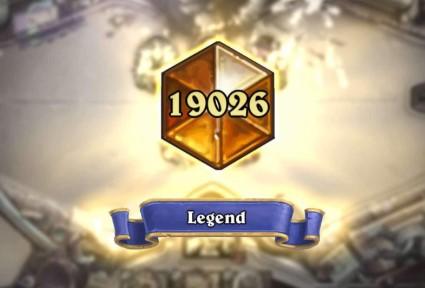
Legend is the top rank. Win your way out of Diamond 1 and the numbered ranks will be replaced by a single gold number on an orange gem: your live position on your region's Legend leaderboard.
Reach Legend for the first time, and where you land depends on your MMR and how many players are already there that month, while the best Legend players in the region sit in the single and double digits on the official leaderboards. From here, stars are gone entirely. Your Legend number moves on MMR alone, dropping (getting closer to number one) when you beat other Legend players and drifting back up when you lose.
Every grind loves this part: you cannot fall out of Legend once you reach it in a season. The worst that happens is your number gets bigger. That safety net is what makes hitting Legend feel permanent in a way no other rank does, and it is why "reached Legend" is the badge serious players actually chase.
If you are bouncing off Diamond 5 month after month, that plateau is almost never about your decklist. Sitting down for a Hearthstone coaching session with a top 200 coach will expose the turn-three misplays you have been repeating for a year without noticing.
Monthly Resets and Ranked Rewards
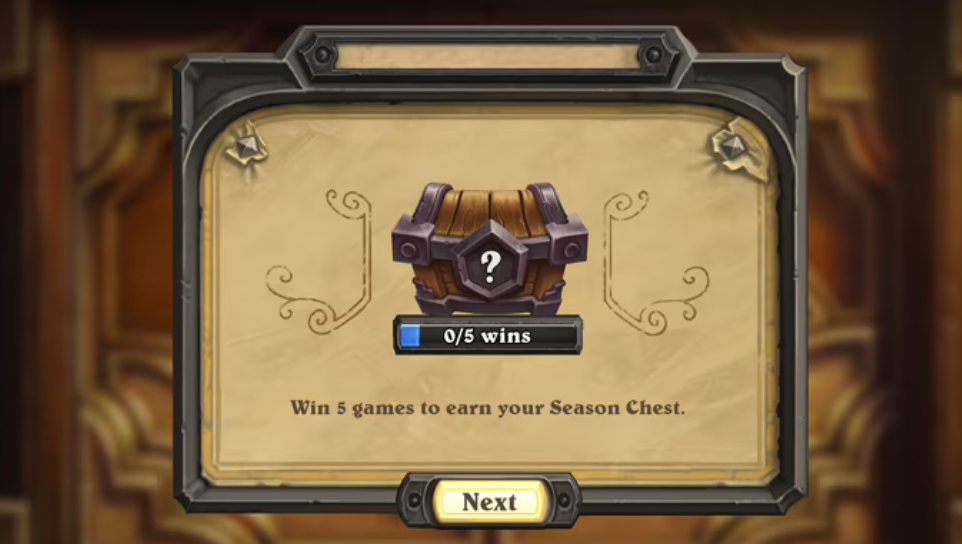
Every ranked season lasts one month, and on the first of the month everything resets: back to Bronze 10, fresh Star Bonus, clean slate. Skip a few days, and you have not really lost progress; you have banked it as a head start for next month.
The rewards come at season's end, and it is tied to the highest rank you hit in either format, not where you happened to finish. Play at least five ranked games, and you collect the Highest Rank Bonus chest, and the rewards stack as you climb: rare cards start rolling in around Bronze 5, card packs join at Silver, an epic waits at Diamond 5, and a Legend finish tops it off with the fattest chest on offer.
On top of the chest, every season carries its own cosmetic card back, and claiming it just takes five ranked wins that month. The November 2025 season handed out the Zereth Mortis card back on those exact terms. It is the one reward even a purely casual player should never leave on the table.
The Hearthstone ranked system rewards playing well and playing at the right time. Front-load your climb while the Star Bonus is fat, lock the league floors that protect both your rank and your rewards, and let your hidden MMR quietly carry you toward the players you actually belong with.
Barry is a gaming writer and former high-elo player covering coaching tips, champion guides, and esports news.
All articles by BarryTurn knowledge into rank
Get a verified pro to review your gameplay and give you a plan.