
TFT Ranks, Distribution, and How the Ranking System Works


Table of Contents
Set 17 launched April 15 with patch 17.1, and a fresh wave of players is back to spamming ranked. Here's how the TFT rank system actually works: every tier and division, where players really land on the ladder (fewer than 5% ever reach Diamond IV), and how the new four-month season tempo that started with Remix Rumble fits in.
TFT Ranks in Order, from Iron to Challenger
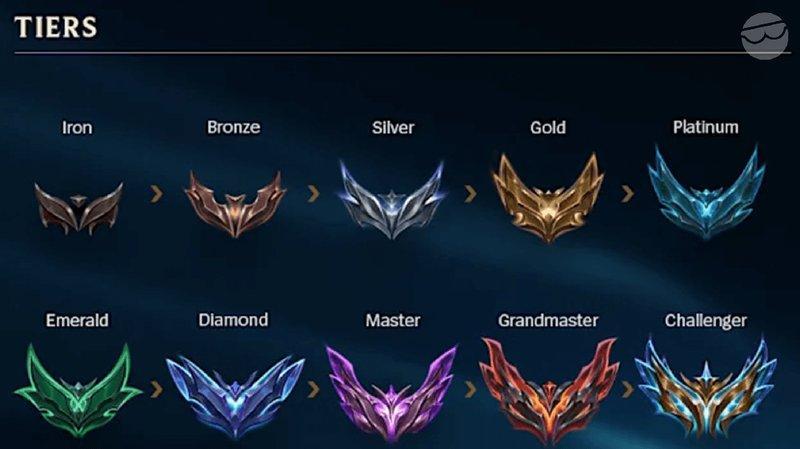
Teamfight Tactics has ten ranked tiers, the same ladder you would see on Summoner's Rift, but with its own player pool and its own MMR.
They go in this order:
- Iron
- Bronze
- Silver
- Gold
- Platinum
- Emerald
- Diamond
- Master
- Grandmaster
- Challenger
Iron through Diamond, each is split into four divisions. IV is the floor, I is the ceiling, and you'll need 100 LP to bump up. Master, Grandmaster, and Challenger are single-tier ladders where LP just keeps stacking until the cutoff for the next rank pulls you in.
TFT Ranked Rewards

Every season, players who finish Gold or higher unlock an exclusive Victorious Tactician (e.g., Victorious Noctero for Set 16), a little flex to show off how far you climbed in seasons past.
TFT Rank Distribution
Set 16 Rank Distribution as of March 2026
Here is the full picture of the TFT rank distribution of the global player base in Set 16.
| Rank | Divisions | Set 16 Player % | What It Means |
|---|---|---|---|
| Iron | IV to I | 0.89% | The starting prison. Hard to get into, easy to leave. |
| Bronze | IV to I | 8.8% | Learning the rhythms of econ and tempo. |
| Silver | IV to I | 22% | The first real climb. Average player territory. |
| Gold | IV to I | 29% | Where most TFT players actually live. |
| Platinum | IV to I | 23% | Real game knowledge starts paying off here. |
| Emerald | IV to I | 11% | Above average and feeling it. Added in Set 10. |
| Diamond | IV to I | 4.2% | Top 6% of the global ladder. |
| Master | Single tier | 1.5% | Roughly the top 2% globally. Decay starts here. |
| Grandmaster | Single tier | 0.043% | Top 750 players per region. 200 LP minimum. |
| Challenger | Single tier | 0.021% | Top 250 per region. 500 LP minimum. Knife fight nightly. |
First, the median TFT player lives in Gold. Almost a third of the player base sits in that one tier, and the average-ranked player hovers around Silver II once you account for everyone below. If you are in Gold IV right now, you are technically beating roughly two-thirds of the ladder. Take the dub!
Second, Iron is shockingly small. Less than 1% of players are stuck there, which sounds wrong until you remember Iron is the prison you have to actively work to get into. Almost everyone clears it in placements.
Third, Emerald is doing exactly what Riot designed it to do. Around 11% of players landed there in Set 16, taking pressure off Platinum and Diamond and creating a real “above average but not yet great” tier. Before Emerald existed, every above-average player was crammed into Plat I, which made matchmaking miserable.
Fourth, the gap between Diamond and Master is steep. You go from 4.2% of players to 1.5%, then it falls off a cliff. Only 0.043% of players reach Grandmaster, and a brutal 0.021% touch Challenger. That is roughly 1 in every 4,700 ranked players. The data tells the same story across regions.
Set 17 Rank Distribution as of May 2026
And as we recently entered Set 17, here is the full picture of the TFT rank distribution for the global player base in early May 2026, which would still be in flux during the early weeks due to the soft rank reset.
| Rank | Divisions | Set 17 Player % |
|---|---|---|
| Iron | IV to I | 3.3% |
| Bronze | IV to I | 14% |
| Silver | IV to I | 29% |
| Gold | IV to I | 24% |
| Platinum | IV to I | 17% |
| Emerald | IV to I | 9.7% |
| Diamond | IV to I | 2.7% |
| Master | Single tier | 0.075% |
| Grandmaster | Single tier | 0.00533% |
| Challenger | Single tier | 0% |
How LP Works in Teamfight Tactics Ranked

LP, short for League Points, is the currency of the climb. You earn it by placing in the top four in a lobby, and you lose it by placing in the bottom four. Simple in theory, brutal in execution. Most lobbies pay out somewhere between 20 and 50 LP for a first-place finish in lower tiers, with the curve flattening hard once you cross into Master.
Three other rules matter:
- No promo series. Hit 100 LP in Gold IV, and you are immediately Gold III, no best-of-three nonsense.
- No tier demotions from Iron through Master. Once you reach Gold IV, you cannot drop back to Silver I, even if your MMR collapses. You can still slide between divisions inside the same tier. This doesn’t apply to Grandmaster or Challenger.
- Provisional placements. Every set kicks off with five provisional matches while the system recalibrates your hidden MMR. Bottom-four placements during these games do not cost any LP, and top-four finishes pay out extra.
Use those provisionals wisely. Lock in your most consistent comp instead of experimenting with the flashy line you saw on Mortdog's stream the night before.
Master, Grandmaster, and Challenger in TFT

Once you crack Master, the rules change. There is no division to crawl through, just a single LP pool you keep adding to. The catch is that Grandmaster and Challenger are population-capped, not LP-capped, and the cutoffs recalculate every 24 hours.
To enter Grandmaster, you need at least 200 LP and a spot in the top 750 players on your server. Challenger demands at least 500 LP and a spot in the top 250. You can sit at 800 LP in Grandmaster and still get bumped down at midnight if enough players above you go on a heater. It is a knife fight at the top, and the in-game leaderboard moves daily.
Decay is the other thing you have to worry about up here. Master+ players can bank up to 14 games of inactivity before the timer kicks in. Per Riot's ranked update notes, the current decay values are 50 LP per tick at Master, 150 at Grandmaster, and a brutal 250 at Challenger. Skip a vacation week, and you can drop a tier overnight.
If your goal is to climb, working with a Challenger TFT coach on WeCoach is faster than grinding 200 games of trial and error. The patterns at the top are different from the ones that win at Diamond, and the people who already live there will save you weeks of reenforcing bad habits.
Hyper Roll Works Differently

Hyper Roll runs on its own point-based ranking system. You'll climb through Grey (0 points), Green (1,400), Blue (2,600), Purple (3,400), and finally Hyper (4,200+). It's also a popular way to get the hang of a new set without the pressure of standard ranked.
How TFT Players Get Unstuck

The TFT ranking system tends to clump players at three specific spots: Gold IV, Platinum IV, and Diamond IV. Each one is a wall built from the same material, a hidden MMR ceiling that LP gains can mask for a long time, then suddenly cannot.
If you want to break through, the playable answer is to stop forcing the same comp every game. The unplayable answer most people refuse to accept is that fundamentals matter more than meta. Tempo, item priority, scout windows, positioning, and economy management decide more games than which one-cost you opened. Watching VODs of better players, especially with a TFT coach reviewing your replays, is how the players who actually climb above their previous ceiling get there.
Barry is a gaming writer and former high-elo player covering coaching tips, champion guides, and esports news.
All articles by BarryTurn knowledge into rank
Get a verified pro to review your gameplay and give you a plan.